
- Early Challenges with Social Cues
I first met Adom when he was in first grade—a strikingly handsome little boy with a serious face. While he was mostly developing typically, it was his challenges with social cues that brought him to my attention, and ultimately gave me the privilege of working with him. He began to frighten his peers because he very rarely smiled, and if he became angry it was expressed with extreme body language. His teacher found a quiet place (coat closet, or the restroom) where he could choose to go if he wanted a place to calm himself down. She and I talked a few times about strategies to help him that year, but the school’s structure required an incoming IEP for me to have done any direct instruction before third grade.
- Creating Safe Spaces for Emotional Regulation
As a third grade student, Adom and his teacher quickly found that my room (across the hall from hers) was a good place for him to cool down when it was needed. By third grade, his angry outbursts were not as severe or frequent as they had been in his earlier grades, but he still required a safe place (for his own sake, but more so for the class to feel safe from him). He was given permission to signal her with a secret (between them) hand gesture and come right into my room. He went to a comfortable chair and moved a room divider over to block him from the view of others who might be in my room in their learning groups.
- Building Trust Through Reflection
When he was calm and I had time to talk to him, he came over and together we talked about: 1) What made him feel angry? 2) How did his body warn him to come to see me? 3) Was there anything he could do differently the next time things like this happened? 4) Did he need to do anything else to calm down? Sometimes he drew a picture. Occasionally we wrote a story together. Usually we prayed together. Finally, before he was allowed to return to his class (and yes sometimes he found the delay inconvenient) we needed to work together to compose an email to his mother, so that she was always informed of what had happened and that he knew exactly what I had written. This way he didn’t feel tattled on, but he knew his mother always knew exactly what had happened. I began to feel very close to his mother as well. She and I are still friends at the time of my writing this.
- Facial Expression Practice and Peer Understanding
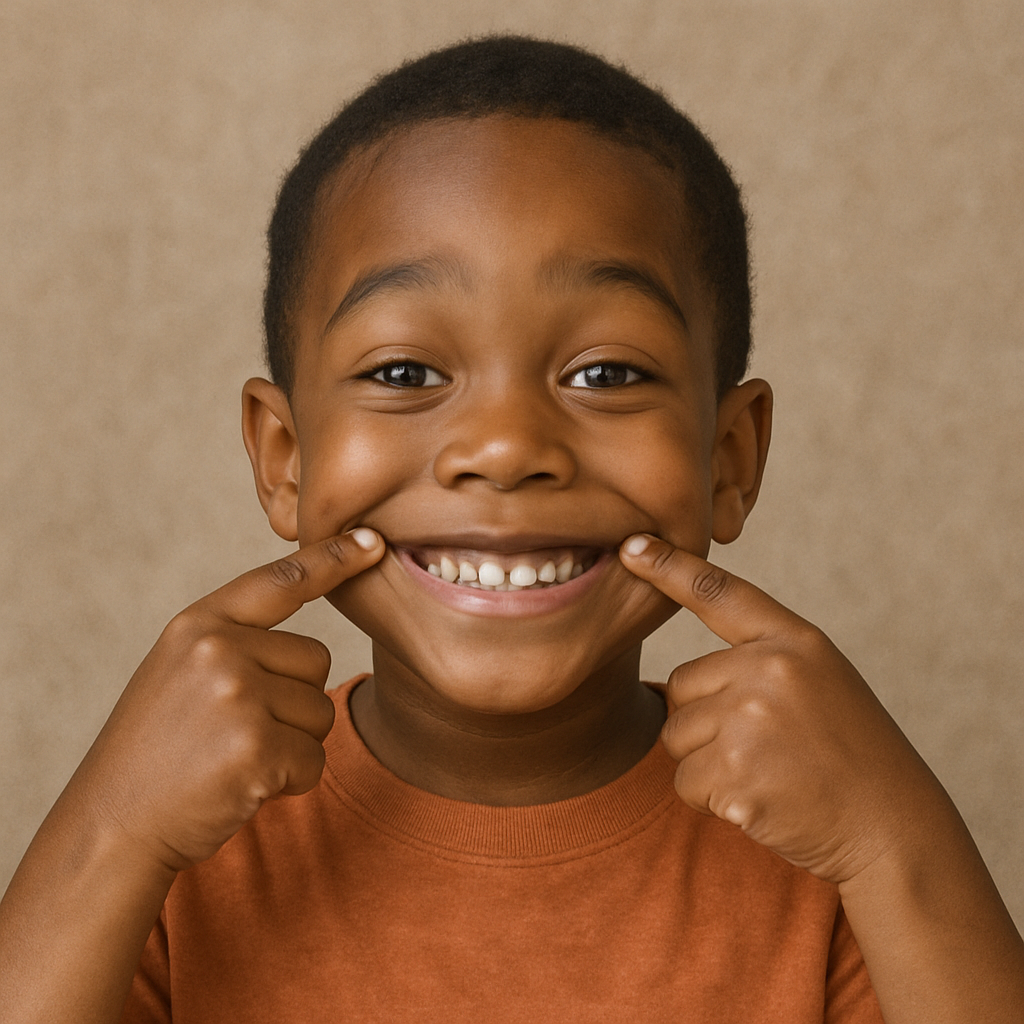
I also worked with Adom, on using a mirror and practicing smiling. We practiced reading his facial expressions and those of his peers. We began to help him to read the faces of peers so that he could not “tell them” (with his face and body language) things he didn’t mean… like messages that would threaten or frighten them.
By spring of that year, I was confident that Adom would leave the support of my room by the end of the school year. This did happen, but more abruptly than I had imagined.
- The Unexpected Breakthrough
One day, I happened to be outside watching some classes have recess. I was near the flagpole, which was pretty close to the front door of the school, when another boy, whom I knew well, fell off the swing. I was watching at quite a distance. Due to this distance, I initially misunderstood what was happening. The second boy, Uri (yeer-ee) was a year or two younger. Uri had cerebral palsy in his feet and legs from the knees down. He was so well practiced in not showing this as a disability, I seriously doubt that anyone other than his closest friend knew about it. However, when Uri fell, he got his feet entangled in the chains of the swing and had his back in the dirt beneath. He could not get up. Adom was standing right beside him laughing hysterically. At a distance, this appeared to be mocking behavior, so I made a quick “bee-line” over to see if I could help. What I found was delightful. Uri was also in hysterics because he was well able to laugh at himself and they were sharing a truly humorous moment as friends. It warmed my heart! I helped Uri up. It was shortly after that day that Adom left the support of my classroom and began to do just fine without me. Such success makes me proud of him.
- Where He Is Now?
At this point many years later, they are both back in the classroom with typically developing peers, getting along fine with others, and apparently remembers me as fondly as I remember him. I’m sure he has a great future ahead of him. I certainly wish him well.
- Closing thoughts
Working with Adom reminded me that social-emotional growth takes time, intention, and partnership—with students, teachers, and families. If you have a student like Adom, consider:
- Creating a consistent “cool-down” space that feels safe and predictable
- Practicing facial expressions and peer cues in a mirror
- Offering opportunities for reflective conversation after emotional moments
- Including families in the communication loop in a way that builds trust
These small strategies can lead to big changes over time. And sometimes, the most surprising signs of progress come in the form of shared laughter on a playground.

971-515-9760
homeschoolspecialed.pm@gmail.com