
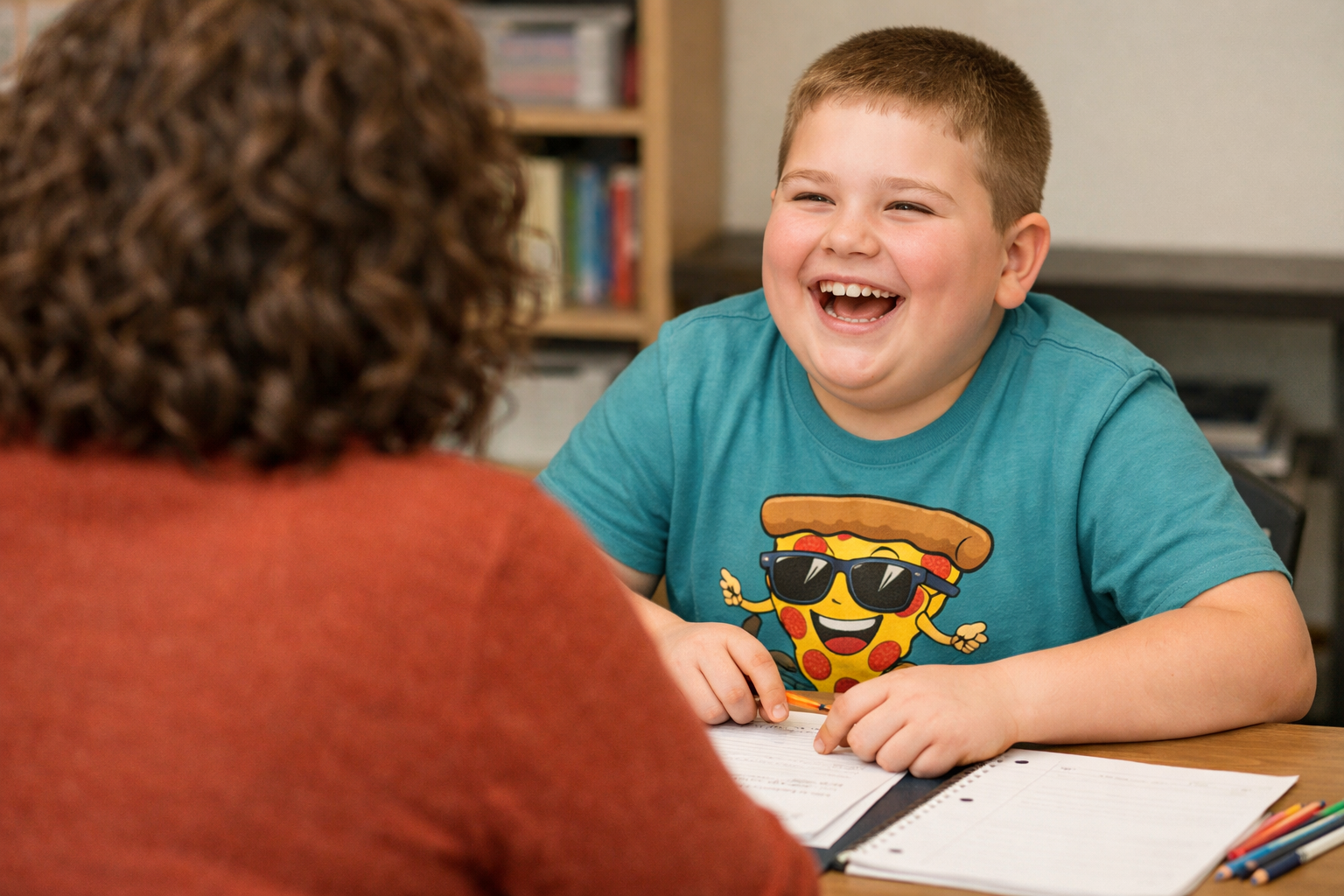
Caden once attended public school, but his parents realized it wasn’t working for him. Caden was born deaf. No one at school noticed until third grade, when a teacher finally referred him for evaluation. After a cochlear implant and recovery, he returned to the same school—but was never referred to Special Ed.
He was placed back into a general classroom where he couldn’t read the directions on his papers, sound out words, or even identify sight words. His teachers had him sit in the hallway at a desk, “doing work” he couldn’t access. He wasn’t being educated—he was being excluded.
So his parents brought him home, overwhelmed and unsure of how to help.
That’s when they brought Caden to me.
Helping His Brain Catch Up
Caden was an instant favorite. What began as a single assessment turned into more than a year of consistent tutoring sessions—often more than once a week.
Because Caden’s brain didn’t have access to sound early on, it never developed the circuits for auditory processing in the typical way. This was a huge barrier to literacy.
So we got creative.
We used multisensory, game-based, joyful learning. Letters and sounds, songs and movement, sight words and spelling—all woven together in a way that was playful and patient. We focused on safety, laughter, connection, and repetition.
Gradually, reading became less of a mystery and more of a skill. He relaxed. He learned. He laughed.
Caden’s brain finally had a safe space to grow.
Emotional Safety First
My tutoring sessions were emotionally safe so that his brain could leave fight-or-flight mode. That’s when the real learning happened. His parents’ home was also a nurturing space. His siblings encouraged him. His family’s support made a huge difference.
I think the greatest gift was this: Caden didn’t have to fear bullying. Or rejection. Or isolation.
He never again had to sit alone in a hallway, confused and excluded.
Why It Matters
This isn’t just about literacy. It’s about humanity.
Kids don’t need to be “socialized” in systems that teach them fear. They need to be seen, known, and loved—so their brains, hearts, and identities can grow in strength and joy.
Caden is not alone. Not all schools are as good at inclusion as they claim to be… If your student isn’t thriving in the setting where you have them, I think I can get you started home schooling in a way that will not stress you out and will really benefit your student long term.

971-515-9760
homeschoolspecialed.pm@gmail.com