ADHD and Home Education — What Can That Look Like?
A compassionate look at movement, learning, medication, and the freedom some families discover through homeschooling.
Some years ago, we had a neighbor family (the Browns — a pseudonym) who became kindred spirits to us. Their only son, Dustin, and our only daughter spent countless hours together in imaginative play. For a season of life, they were almost like siblings before the family eventually moved away.
A Different Kind of Learning Environment
Over time, the Browns explored several educational options for Dustin. One year, they asked if I would home educate him because his ADHD was becoming difficult for his private school setting to accommodate. I was genuinely happy to do it.
At our home, the days were structured, but shorter than a traditional school day. We took frequent movement breaks. We laughed constantly. We were delightfully silly together.
Dustin especially loved language play and literature, and he was far better at math than I was. When he solved complicated multi-step problems in his head, I would ask him to explain his thinking aloud. I think slowing down those lightning-fast mental processes helped him retain concepts more deeply over time; not to mention, it helped me know if he was just “accidentally” correct, or if he could just do the calculations with hardly any conscious thinking.
That year remains one of my treasures.
We were also able to give Dustin that year without stimulant medication. Prior to that, his family had used Ritalin during his years in traditional school settings, beginning when he was quite young.
The Harder Years
As Dustin grew older, I watched from a distance as life became harder for him in some ways. Even with deeply committed and loving parents, he struggled with impulse control, executive functioning, boundaries that were not clearly defined, and a tendency toward risk-taking behavior.
There were periods of addiction, recovery, instability, and rebuilding.
By his mid-20s, Dustin was sober and doing well again. Then one night, impulsively, he sought out drugs and unknowingly consumed a substance that had been laced with poison. He was found dead the next morning, leaving behind a devastated family who had loved him fiercely all his life.
This is not every ADHD story. Not even close.
Questions Many Families Quietly Ask
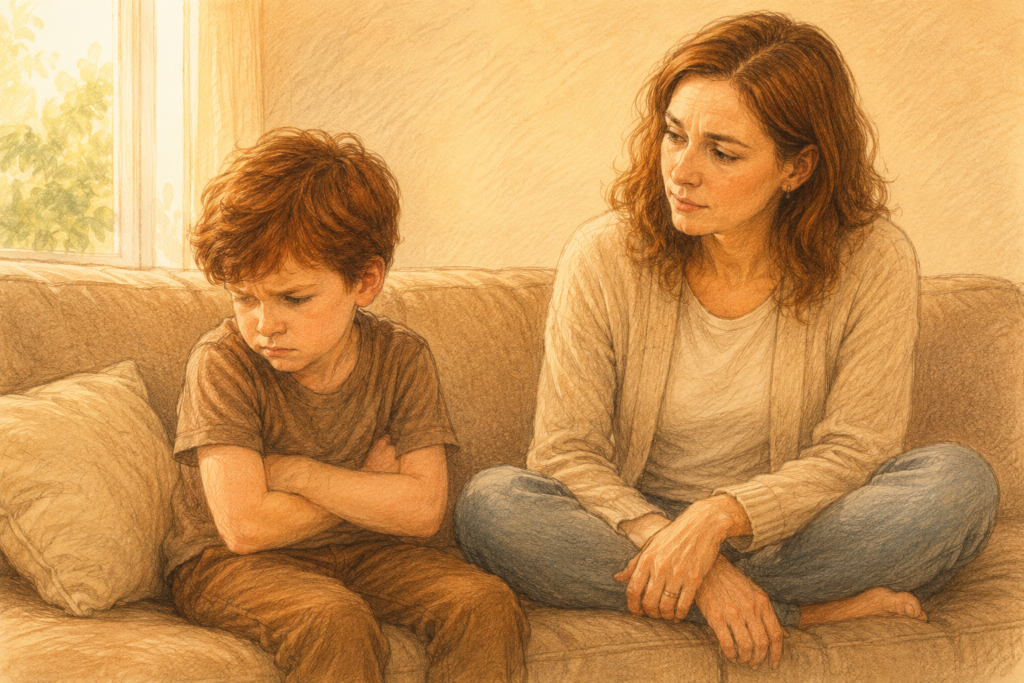
But experiences like Dustin’s have made me think carefully about how quickly medication is sometimes presented as the primary solution for energetic children — especially boys — in institutional school environments that are not always designed for movement, creativity, or neurological differences.
If it were my child, I would want to work closely with trusted medical professionals — perhaps including a naturopathic physician — to explore nutrition, supplements, environmental factors, movement, sleep, and other supports before assuming a stimulant-dependent life was the only path available.
I also have a dear friend in her 20s who was homeschooled throughout her education while living with ADHD. Her family chose nontraditional supports, including moderate caffeine use instead of prescription stimulants. Today, she is thriving as a barista and independent young woman.
Was homeschooling always easy for their family? I doubt it.
But sometimes “possible” matters more than “comfortable.”
The Strength of Relationship
One thing I have consistently observed is this: I have never personally seen home education damage a child. Schools are filled with many caring teachers doing difficult work, but no classroom teacher — however compassionate — can care for a child in the same deeply personal way a loving parent can.
You may feel overwhelmed at times while homeschooling. There may be laundry waiting, floors needing mopped, babies crying, and dinner still not planned. But parents somehow continue finding ways to focus on the child in front of them because love keeps pulling their attention back where it belongs.
And for some ADHD children, that relational environment may matter more than we realize.
If this resonates with you, or if you have questions about ADHD and homeschooling, I would be glad to talk with you.
Patty McCarty, LLC
Homeschool Special Ed Consultant
The Homeschooler’s Success Coach
📞 971-515-9760